
Home »
The strongest case for a wind turbine is usually a site with a good wind resource and a business that uses a lot of the electricity itself. Two of our projects show what that looks like. At Hibaldstow Farm in North Lincolnshire, a 500 kW EWT turbine supplies a poultry farm and exports the surplus to the grid. At Blacktoft Nursery, a turbine of the same size powers a large commercial greenhouse.
Renewables First provides wind turbine solutions for businesses, farms, landowners and developers across the UK, from single turbines for on-site use to larger onshore wind developments built mainly for export. Our engineers handle feasibility, turbine selection, planning, design, installation and ongoing operation.
Choosing the right wind turbine solution for your site
Wind turbine projects vary widely in scale and purpose. The right wind turbine solution depends on your site’s wind resource, energy requirements and development constraints.
Single wind turbines and medium-scale wind projects
Individual turbines can suit farms, commercial premises and industrial sites with enough space and favourable wind conditions.
A medium-scale turbine can supply electricity for on-site use, with surplus generation exported to the grid where a connection agreement is in place.
Turbine capacity and expected annual generation need to be sized against the site’s electricity requirements.
Larger onshore wind developments
Larger sites can take multi-megawatt turbines, turbine clusters or wind farms.
At this scale, turbine positioning, environmental impacts, planning requirements, construction access and grid infrastructure all need detailed assessment.
On-site electricity generation and grid export
Wind turbines can generate electricity for direct consumption, grid export or both.
The right arrangement depends on when electricity is needed, how much the turbine is expected to generate and the commercial terms available for exported power.
Wind turbine solutions for farms, businesses and landowners
Onshore wind can work for a range of organisations, provided the site and electricity demand are right.
For farms and agricultural businesses, a turbine can supply power for poultry production, refrigeration, irrigation and other energy-intensive operations.
Commercial and industrial businesses can benefit from on-site generation, particularly where their consumption profile means a large share of the output is used directly.
Landowners and developers may look at larger turbines or wind farms built mainly to export electricity to the grid.
Not every site is suitable, though. Before going further, you need a strong wind resource, manageable development constraints and a viable grid connection.
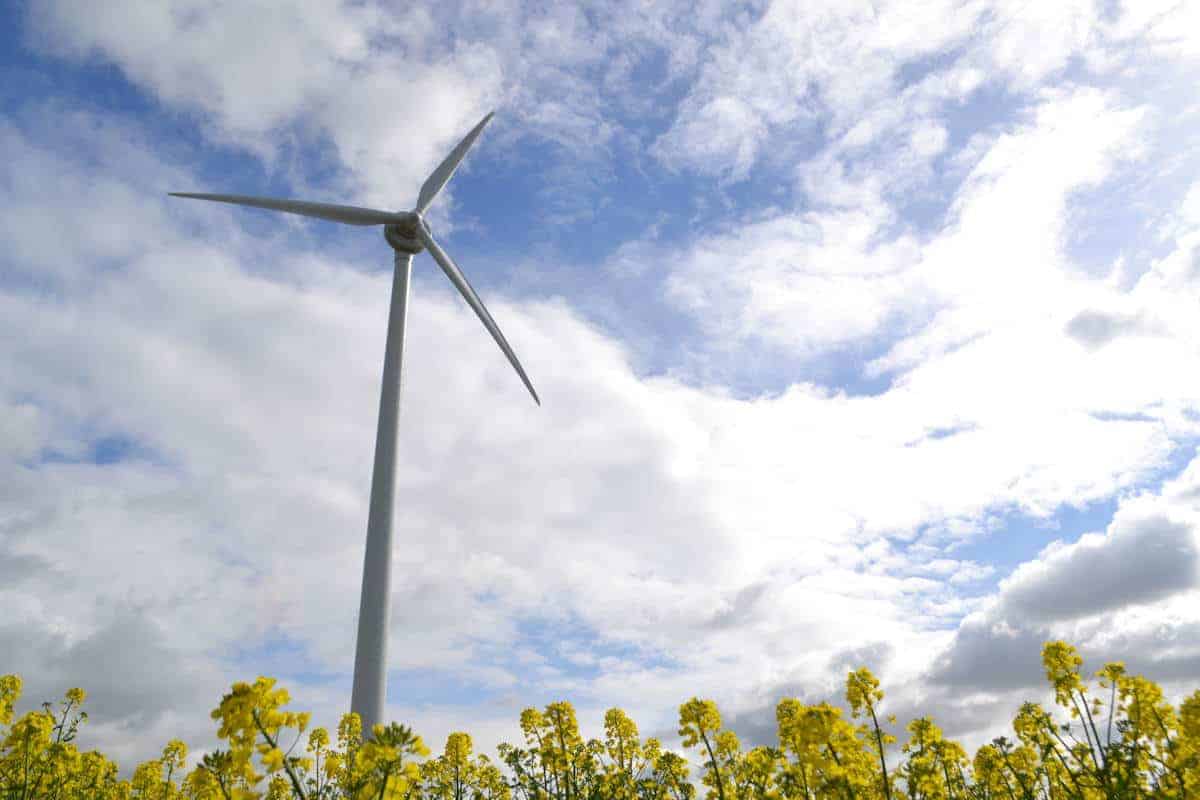
How we assess a site for wind
Before comparing wind turbine solutions, you need to know whether your site can support a turbine at all.
A wind turbine feasibility study establishes whether a proposed development is technically, environmentally and commercially realistic.
Wind resource and turbine location
Wind speed drives electricity generation, but a good site average doesn’t guarantee good output at the turbine position.
Local topography, nearby buildings, trees and other obstacles affect airflow and create turbulence. Turbine height and positioning also change how much energy a turbine will produce.
Wind resource modelling identifies the best positions on the site and estimates annual generation.
Planning and environmental constraints
Onshore wind developments have to account for planning policy, landscape and visual impact, noise, ecology and nearby properties.
Aviation radar, telecommunications links, heritage designations and shadow flicker can also be constraints.
Assessing these early flags potential obstacles and shows whether further surveys or design changes will be needed.
Grid connection, access and energy demand
A site with a good wind resource still has to be practical to build on.
Large turbine components need suitable delivery routes, crane access and construction space. Grid capacity and connection costs can decide whether a project is viable at all.
For commercial sites, comparing expected generation with electricity consumption shows how much of the power could be used on-site.
We assess these factors together, so clients know where they stand before committing significant investment.

Wind turbine solutions from feasibility to installation
Wind projects need engineering, planning and construction to be joined up.
Renewables First supports the whole development process, so decisions made at the feasibility stage still hold up during construction and operation.
Feasibility and wind turbine selection
We assess the wind resource, physical constraints, grid availability and project economics to identify viable development options.
We also help clients compare wind turbine suppliers and choose equipment that suits the site’s conditions and requirements.
Planning, consenting and engineering design
We support planning applications, coordinate specialist assessments and produce the civil and electrical designs needed for construction.
Dealing with planning constraints, environmental impacts and grid requirements early reduces the risk of problems later on.
Procurement, construction and commissioning
Once permissions and designs are in place, we can manage turbine procurement, construction, contractor coordination and commissioning.
Our onshore wind installation services cover the infrastructure needed to get a wind energy system up and running.
Ongoing operation and maintenance
Regular maintenance, performance monitoring and prompt fault identification keep availability up and operating costs under control throughout the turbine’s working life.
Renewables First provides operations and maintenance support for installed wind turbines.
Understanding wind turbine costs and long-term performance
The cost of a wind turbine project depends on turbine size, ground conditions, site access, electrical infrastructure, grid connection requirements and construction complexity.
Financial returns come down to expected generation, electricity consumption, export arrangements and ongoing operating costs.
A bigger turbine isn’t automatically the better investment. The best solution balances generation potential against development costs and the constraints of the site.
A feasibility assessment models these factors to give realistic estimates of project cost, energy production and likely financial return.
Wind turbine solutions in practice
We’ve designed and delivered onshore wind projects for commercial and agricultural clients, including the two below.
Blacktoft Nursery – 500 kW wind turbine
At Blacktoft Nursery, Renewables First supported the feasibility, design, consenting and construction of a 500 kW EWT wind turbine.
The turbine was installed to supply electricity directly to the nursery’s large commercial greenhouse, an energy-intensive operation.
Explore the Blacktoft Nursery project.
Hibaldstow Farm – 500 kW wind turbine
At Hibaldstow Farm in North Lincolnshire, Renewables First specified a 500 kW EWT turbine and managed the civil, mechanical and electrical elements of the project.
The turbine supplies electricity to the poultry farm, with surplus generation exported to the grid.
Speak to a wind engineer
Thinking about a wind turbine? Our engineers can assess your site’s potential and explain what the next steps would be.
Enquire now to discuss your requirements.
Frequently Asked Questions
What size wind turbine is suitable for my business or land?
It depends on wind conditions, available space, electricity requirements, planning constraints and grid capacity. A feasibility study will narrow down the suitable options.
Can a wind turbine supply electricity directly to my business?
Yes. A suitably designed turbine can supply electricity directly to your business. How much of its output you use on-site depends on the turbine’s generation profile and your electricity demand. Surplus electricity can be exported, subject to an export agreement being in place.