
Wind Project Feasibility Study
A comprehensive wind project feasibility study is essential before committing significant investment to an onshore wind development. At Renewables First, we help landowners, businesses and developers evaluate whether a site is technically, commercially and environmentally viable for wind energy generation.
Onshore wind projects involve many variables, some of which conflict with each other. There is no such thing as a ‘perfect’ wind site – even the best sites have some risks and these must be carefully managed and mitigated.
Our structured Wind Feasibility Study helps you evaluate if your site is viable for a wind turbine project before committing significant funding to a planning application. We combine wind engineering, planning expertise, environmental knowledge and commercial experience to provide you with a clear decision-making tool.
Whether you’re looking at a single turbine or a small wind farm, our feasibility studies de-risk the process from the very beginning.
Want an initial check of your site’s potential, or discuss your project?
What’s Included in a Wind Project Feasibility Study?
The following describes each section of the Wind Feasibility Study, in the order that the work is undertaken.
Wind Resource Estimate
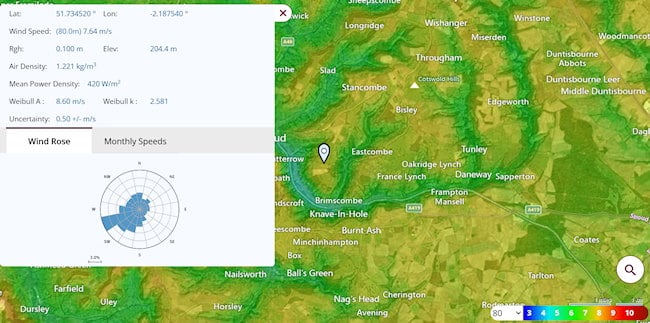
Renewables First use ULTRUS Windnavigator software to assess the wind resource at your location. This anaylsis provides:
- Accurate wind speed data
- Wind roses for hub heights between 10 and 140 metres
- Turbine positioning recommendations based on local topography
- Exposure analysis to maximise energy generation potential
Understanding the wind resource is fundamental to determining whether a project can achieve viable energy yields and financial returns.
Constraints Mapping
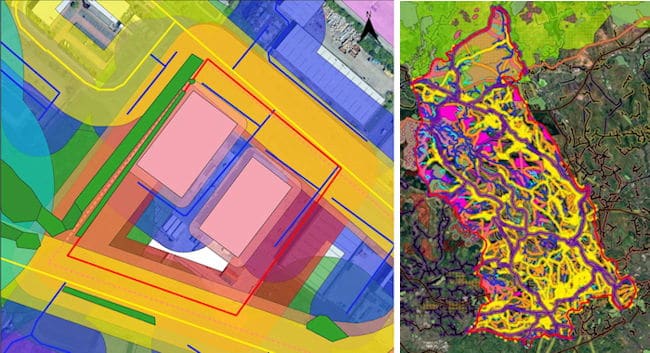
Constraints maps are the simplest way to assess the many risks and variables that need considering during a wind feasibility assessment.
Using GIS software and extensive spatial datasets, Renewables First maps the site and surrounding area while applying industry-standard buffer zones around identified sensitivities.
The data sets used include:
- Landscape designations
- Ecological designations
- Heritage designations
- Footpaths, bridleways & roads
- Railways
- Woodland & hedges
- Residential and non-residential properties
- Electricity distribution and transmission cables
- Water bodies and water courses
- Historic coal mining
The aim of producing constraints maps is to eliminate the areas that are impacted by the sensitivities above to leave a residual ‘developable area’ for further more detailed assessment.
Communications Links Assessment
Once the area for potential wind turbine development has been narrowed-down with the constraints mapping, it is important to check for conflicts with known fixed-link (microwave) communications. It is often surprising to landowners how many fixed-links pass over their land without their knowledge, particularly in more densely-populated areas.
The initial communications link assessment is completed using:
- Publicly accessible datasets on link positions, end nodes and transmitter locations.
- Through consultation with Ofcom, JRC and Atkins who manage the link information on behalf of operators.
Any conflicts with fixed links are not necessarily show-stoppers, but may require micro-siting of wind turbines to reduce the impact or more detailed analysis and consultation with the link operators. This more detailed work is normally completed as pre-planning work.

Aviation and Radar Assessment
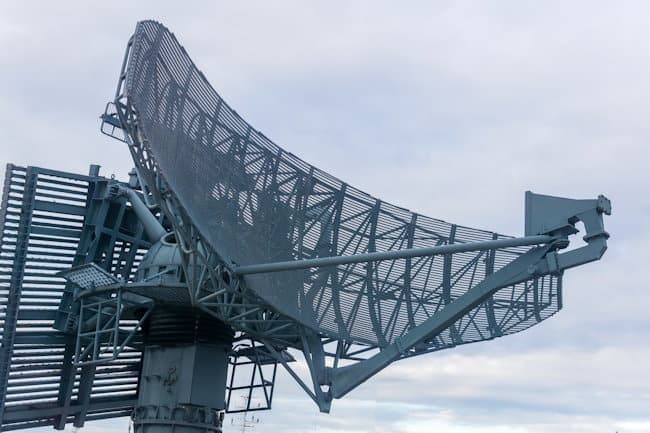
Wind turbines are an obvious physical risk for aircraft and can also affect radar which is used for military and civilian airspace management, and weather forecasting. Our initial aviation and radar assessment includes:
- MOD (military) low flying zones and fixed radar stations.
- NATS (civilian) Primary and Secondary surveillance radar and navigational aids.
- Civilian airports / aerodromes and MOD air bases.
- Met Office radar sites.
It is rare that a wind site doesn’t have at least one radar sensitivity that arises, so we will assess the severity of the risk and outline the next steps to mitigate the risk. This more detailed work is normally completed as pre-planning work.
Wind Turbine Selection and Site Layout
At this stage, the findings from earlier assessments are used to determine:
- Suitable turbine sizes
- Turbine quantities
- Site layout configuration
- Spacing requirements
- Technical and operational constraints
This process is often iterative and informed by planning considerations, noise modelling and shadow flicker analysis.
Key Design Considerations
- Constraint Compliance: Layouts must accommodate all environmental, planning and technical sensitivities identified earlier in the process.
- Communication & Radar Mitigation: Turbine positioning may be adjusted to reduce impacts on communications infrastructure and radar systems.
- Operational Performance: Turbine operational modes are assessed to balance energy production with acceptable noise and shadow flicker levels.
Shadow Flicker Assessment
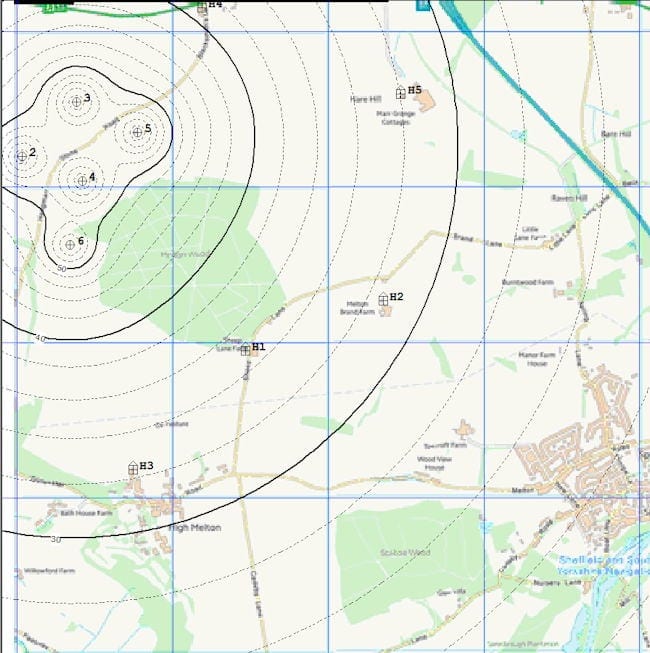
If shadow-flicker is relevant (i.e. if there are residential properties within 10x rotor diameters of the site) we will undertake a shadow flicker assessment to assess the risk that this could be an issue and work out when and at what times of the day this would occur at each sensitive site.
This would allow a Planning Authority to quantify the impact and make a realistic judgement on the scale of the impact, and whether mitigation would be required.
Noise Modelling
Although modern wind turbines are relatively quiet, noise remains a major planning consideration.
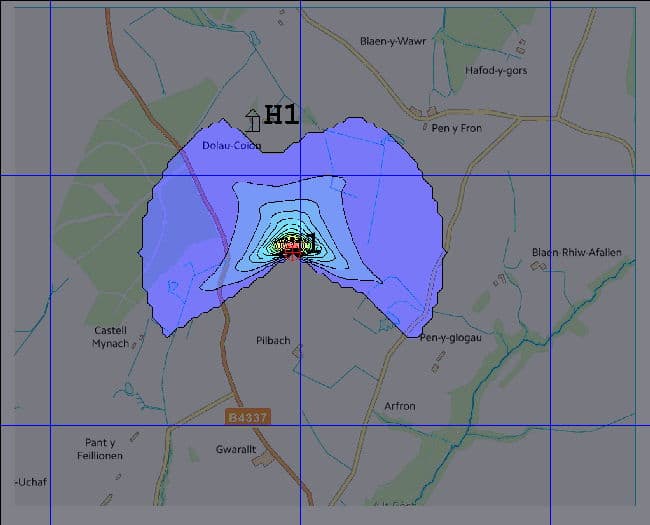
Renewables First undertakes feasibility-stage noise modelling using ETSU-R-97 guidance to assess likely separation distances from nearby properties.
Noise Assessment Services
Standard Noise Modelling
- Assessment based on the 35 dB(A) limit, or 45 dB(A) for financially involved properties.
- Calculation of minimum separation distances between wind turbines and nearby residential properties.
- Feasibility-stage modelling assuming no significant background noise is present, representing a worst-case scenario from the developer’s perspective.
Cumulative Noise Analysis
- Modelling for projects involving multiple turbines or nearby operational wind developments.
- Assessment of combined turbine noise impacts across the surrounding area.
Background Noise Monitoring
- Background noise surveys for industrial sites or locations near major roads.
- Measurement of LA90 10-minute background noise levels at sensitive receptor locations.
- Detailed modelling using background noise + 5 dB(A) as the applicable noise limit.
- Typically undertaken during the pre-planning stage where required.
Planning Sensitivity Assessment and Planning Review
At this point in the feasibility study process the focus switches from the technical / engineering assessments above and into the more subjective field of planning policy.
Renewables First would:
- Review the constraints maps and assess the risk level of any sensitivities identified.
- Similarly assess the aviation/radar, communication links, noise and shadow flicker sensitivities.
- Comment on whether the project would be likely to require an Environmental Impact Assessment (EIA).
- Review the project in the context of national and local planning policies.
- Consider the political risk (make-up of the local planning committee and the views of the local MP in regard to wind turbines).
- Review the surrounding area to identify nearby operating wind sites and, along with refused planning applications, review those projects on the Planning Portal to identify any recurring issues that have arisen or particular local sensitivities.
Site Access & Logistics
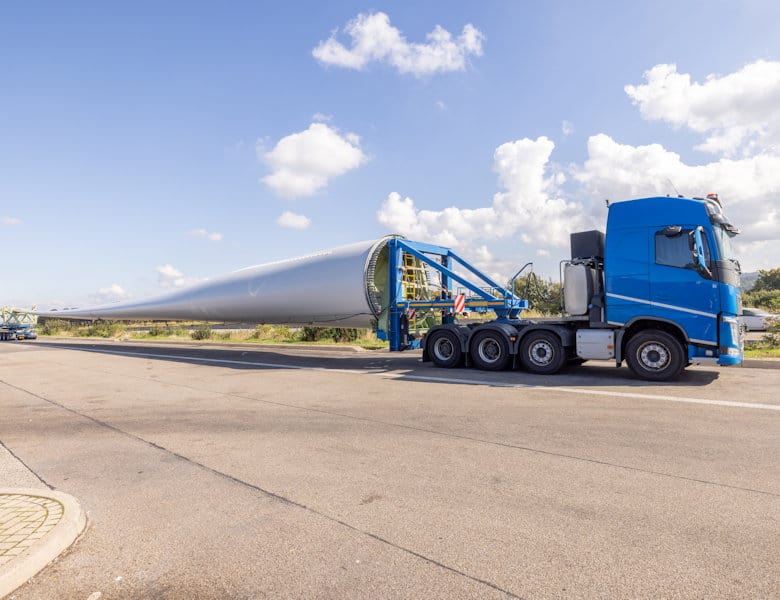
Large wind turbines are made up from large components – particularly blades, the nacelle and tower sections. These items not only require very large delivery vehicles to bring them to site, but also enormous cranes to lift them into position.
At the feasibility study stage we assess site access from the nearest major A-road or motorway by:
- Checking for weight limits and height / width restrictions on bridges.
- Checking road gradients.
- Checking width and height of carriageway.
- Checking all curves and corners using ‘swept path’ overlays.
- Identifying any street furniture (signs etc.) which may need temporary removal.
Grid Connection Assessment
Grid connection is another key factor for wind projects, particularly projects where all of the generated electricity will be exported to the grid. Even for commercial sites that can consume all the generated electricity on-site, permission to grid connect the system is still required.
Renewables First would:
- Review all publicly available data on Primary Substation and Bulk Supply Point capacity.
- Identify nearby infrastructure on the LV / 11 kV / 33 kV and 132 kV networks.
- For sites with existing supplies, determine their capacity, current loads and usage profile.
- Review the likelihood of being able to obtain grid connection permission and recommend what steps are needed to secure a connection offer (note this would normally be done at the pre-planning stage).
Energy Yield & Financial Modelling
A successful wind project feasibility study must determine whether a project is financially viable.
Renewables First combines engineering expertise with practical construction experience to model realistic project costs and returns.
We would:
- Estimate the annual energy production of the wind turbine(s) using specialist software, accurate wind resource characteristics and a realistic allowance for downtime for maintenance.
- Match the generation profile to the site load profile to estimate the amount of generated electricity that could be consumed on-site (where relevant).
- Calculate the gross revenue and net revenue after allowance of operating costs.
- Calculate the return on investment and payback period.
Based on this, you’ll understand if your project is viable, borderline, or not currently feasible.
Onsite Energy Use, Electrical Integration and Energy Storage (batteries)
Large industrial or commercial sites that can consume significant amounts of electricity produced by wind turbines can be much more financially attractive projects than sites where 100% of the energy is sold to the grid because selling electricity is worth 2 ½ times less than offsetting electricity that would otherwise have to be bought.
There is also a ‘middle ground’ where a site can consume some but not all of the electricity generated, and in this case it is important to quantify how much could be consumed and how much exported because it has such a significant financial impact on the project.
In some cases where local demand varies significantly over a 24-hour period, or where an export agreement has time-of-day pricing which makes exporting power at particular times more attractive, we can assess the financial benefit from installing an energy storage (battery storage) system.
Renewables First’s Approach
We would:
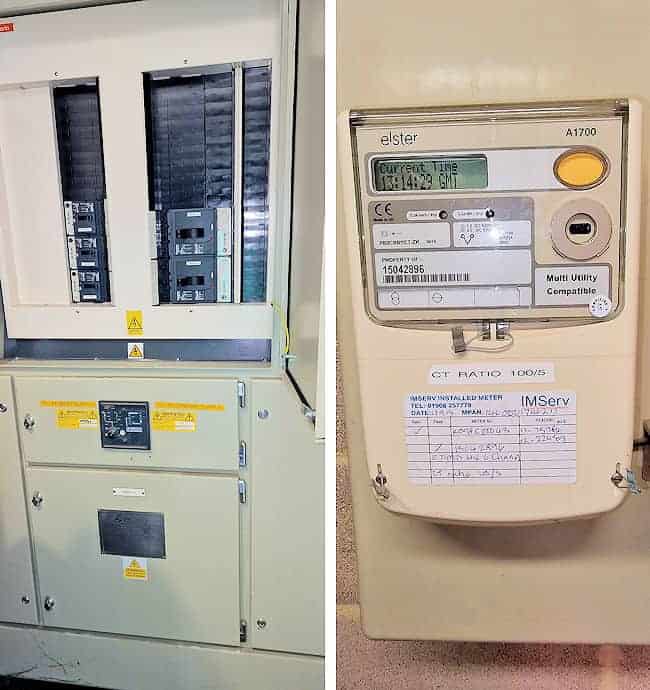
- Review all energy consumption data (normally several years of half-hourly data) to determine the demand profile.
- Compare the demand profile with the generation profile of the wind turbine(s) to quantify how much energy could be consumed onsite and how much exported.
- Where relevant, assess the financial viability of installing an energy storage system (batteries).
Environmental Impact & Carbon Savings
Environmental performance is increasingly important for businesses and organisations pursuing net-zero goals.
Renewables First quantifies:
- Annual CO2 emissions reductions
- Equivalent environmental benefits
- Household electricity equivalents
- Vehicle emissions offsets
These metrics can support sustainability reporting, planning applications and corporate communications.
Conclusions, Recommendations and Next Steps
A wind project feasibility study covers a considerable breadth and depth of technical, environmental, planning and financial assessments. As outlined throughout this page, no wind site is entirely free from constraints or sensitivities. Even highly successful projects often involve risks that must be carefully identified, understood and managed in order to progress successfully through planning and into construction.
The key factor is not whether risks exist, but whether those risks can be quantified and mitigated through a realistic and well-planned strategy. Many projects with identified sensitivities still go on to achieve planning consent because those issues are addressed early and managed appropriately.
Renewables First summarises all identified risks under each main assessment heading within the final feasibility report. We then recommend what further work should be undertaken, and in what order, to mitigate those risks before committing to a full planning application.
We refer to this as pre-planning work, and it is an essential stage of the development process. It ensures clients move into the formal planning application process with clarity, reduced uncertainty and a much stronger understanding of the potential challenges, risks and opportunities associated with the project.
Speak to Renewables First About Your Wind Project Feasibility Study
If you are considering an onshore wind development, Renewables First can help you understand the technical, planning and financial viability of your site before significant investment is made.
Our experienced team delivers detailed wind project feasibility study services for commercial, industrial and agricultural projects across the UK, helping clients identify risks early and progress projects with confidence.
Get in touch today to discuss your site, request an initial assessment or speak directly with one of our wind energy specialists.
Want an initial check of your site’s potential, or discuss your project?
Our Clients
Renewables First works with commercial businesses, farms, industrial operators and landowners across the UK to deliver high-performing renewable energy projects.
We do not just produce reports. We design, build and operate renewable energy systems that generate measurable results.
Landowners, Farmers and Estates
Commercial Clients
Utility Companies
Community Groups
Local Authorities
Investors
Private Residences
Educational Institutions
Conservation Groups
Landowners, Farmers and Estates
Commercial Clients
Utility Companies
Private Residences
Educational Institutions
Conservation Groups
If you have a lot of land, you will have a lot of renewable energy generation potential, often utilising different technologies. We can assess your land and building assets to identify the sites with the highest potential, then provide all of the services you need to get the sites fully assessed, designed, consented and built. For some clients we operate the finished system for them so they have minimal disruption and just get the financial benefit produced. In some cases we can link ‘investors looking for sites’ with ‘landowners looking for investment’.
We work with a lot of businesses that want to a) reduce their energy bills and b) significantly reduce their carbon emissions. This is our core business. We can do everything from detailed feasibility studies, through the design and consenting stages and then build your system. We understand that any disruption to your day-to-day operations during the construction stage must be minimised and are very familiar with designing systems that are compliant with the needs of commercial insurance companies. As the client, you can be as involved, or not involved, as you want to be - either way we will appoint a Project Engineer to be your knowledgeable first point of contact and keep you informed throughout the process. Our expertise will deliver you an optimised renewable energy generation system that will reduce energy costs and carbon emissions and look great on your marketing material.
We’ve done many projects with utility companies. We are adept at high-level portfolio and site assessments to identify potential projects, all of the way to detailed design, consenting and construction. We are familiar with your critical day-to-day operational functions which must not be compromised, your strict adherence to the highest standards of Health & Safety and rigorous approval processes that must be followed at all project stages.
We support co-operatives and local groups with the technical engineering and project delivery of community-scale renewable projects. Community groups can generally access a lot of grants, particularly to find the feasibility and consenting stages – we are always abreast of what is available and happy to discuss how to access these grants. We can also point groups towards template group structures that are available to use, and introduce new groups to community groups that have been through the process and have a wealth of knowledge and experience to share.
We work with local authorities for the operation and maintenance of existing renewable energy systems, design and build new systems and undertake consultancy work on whole-area renewable energy resource assessments, which often form the basis of local development plans. Many local authorities have ambitious carbon reduction targets to meet, so our expertise in actually designing and building systems makes us a reassuring partner in any project.
We’ve worked with private individuals, family offices and investment funds to deliver technically robust, long-term renewable generation projects. Our focus is on dependable engineering delivery and attractive project ROI.
We work with high-demand residential properties where there is space for larger renewable systems. We can offer conventional grid connected systems, fully off-grid capable systems in case electricity supplies fail in the future and energy (battery) storage systems. Systems can be designed to be discreet, and we will respect your privacy.
We help schools, colleges, and universities deploy on-site renewables for cost savings, resilience, and climate education. Educational institutions often have complex consumption data, but we are adept at analysing this to understand when you need generation. We can assess your building and land portfolio for its renewable energy potential and recommend the best options, then design and deliver it. Operational Health & Safety are always key considerations in educational settings and we can recommend appropriate mitigations.
Our building and land portfolio assessment services are key for identifying the best renewable energy generation opportunities, then we can design and deliver systems that are sympathetic to the particular building’s aesthetic or land’s ecological sensitivities.